
What Clients Ask Before Signing a Builder
The ten questions London homeowners ask before signing a builder, answered from our own quotes and contracts: scope, payment and completion.

- 4.8★ Google · 17 reviews
- £500 per week if we finish late
- £17m insurance cover · £5m public liability
- 12-month warranty on second-fix fittings · HomePro registered
- £550 survey credited in full

Ten questions decide most London builder enquiries, and the payment one has a number in it: 10% at contract signing, then weekly, against work already done, with 5% held back to the end of the defects period.
Those ten come up in almost every enquiry we get. They are not the questions people expect. Nobody asks first about the brand of the kitchen. They ask whether there is a catch in the quote, whether they can talk it through, and when the work will end. The answers below come from our own quotes and contracts, and they are the answers we would give you on a call.
For a rough guide, the calculator gives a range in a couple of minutes. A firm number needs a measured survey, which we credit in full if you appoint us.
1. What exactly is included, and what is not?
Every quote we issue is a stage-by-stage bill of quantities. The work is split into twelve stages, from preliminaries and demolition through structure, services, finishes and external works to completion. Each line shows its quantity, unit, rate and amount.
If a line is not on the quote, it is not in the price. Anything added later is a priced variation that you approve before the work is done. Ask any builder for the same thing: a list of stages with amounts beside them. A builder who cannot produce one has not yet decided what is included.
2. Can we meet, talk it through, or see the work?
Yes. We measure the house before we price it, then take you through the quote on a call, line by line. The point of the call is not to win the sale. It is so that you understand each line and can disagree with it.
You can judge our work on finished projects, with photographs, on the projects page. If your job is close to one of them, ask us to show you that one first.
3. Can the price come down?
It can, but the honest route is the scope or the specification, not the rate on each line. A cheaper finish, a different layout or a smaller extension moves the total. A cut to our rates would move it too, and it would also tell you something about how the work would be done.
Ask for each option priced separately, with what it gives up written beside it. Then the decision is made on the numbers rather than on who sounds more confident.
4. Can you give a ballpark before you have drawings?
Yes, and the width of the range should be part of the answer. Our calculator gives about plus or minus 20% from the type and size of the job. Once the measured area, postcode, finish and scope are known, the band narrows to about plus or minus 7%.
That narrow band describes the answers you gave. It is not a fixed price, and it does not cover what a survey may find once the floor comes up. A firm figure needs a measured survey.
5. Do we need planning or Building Regulations, and will you handle them?
It depends on the job, and it is better to find out early. A loft conversion, a rear extension and a basement each bring different consents, and the design work for planning is normally done by an architect or structural engineer. Our job is the build.
Send the drawings or any planning decision, and we will say which consents the job needs and who is responsible for each. Our planning and permissions page sets out the routes in more detail.
6. When can you start, and how long will it take?
The start date is agreed when the contract is signed, once the programme and any consents are known. Every contract carries a completion date, and that date is written into the contract. Long-lead items such as windows, steel and kitchens are the usual cause of delay, so ask for them to be listed with their dates before you sign.
7. How do you get paid, and when?
We take 10% at contract signing, before the site starts. After that, payments are made weekly, against work already done. Five per cent of the price is held back: 2.5% at practical completion and 2.5% at the end of the twelve-month defects period.
This is a payment schedule, not escrow. You pay us directly, against work you can see, and we do not hold your money. The structure keeps the money behind the build rather than ahead of it, so on any given day the amount at risk is roughly one week's work.
8. Can we see past work, or speak to someone we have worked for?
Start with the finished projects on our projects page, which show the work with photographs. Ask us which of them are closest to yours. A builder who has nothing to show you should not be the one you hire, however good the call.
9. How do you handle changes once the work has started?
Changes are a normal part of a renovation, and the question is how they are priced. Every change should be written down, priced and approved by you before it is carried out. Ask how long a variation takes to price, because a builder who waits until the end of the job to tell you what it cost has taken the decision away from you.
10. What happens if the work runs late?
Ask for the completion date in the contract, and for the remedy if it is missed. Then ask who decides whether a delay is the builder's fault or a change you approved. A date without a consequence is only a hope. Our contracts carry a completion date with a stated consequence if it is missed.
Where to start
If you are comparing builders, put the same ten questions to each of them and compare the written answers. The one that answers in a line-by-line quote, a dated payment schedule and a written completion date is the one to talk to next.
If you would like us to answer these for your house, the calculator is the quickest start, and the survey is the next step when you are ready for a firm number.
Straight answers
The home you actually want, finished on the date in the contract — and you watch every day of it happen from your phone.
We finish on the agreed date, or we pay you £500 for every week we are late.
The date is in the contract, and so is this. Only a variation you approve can move it.
Everything included, line by line
- 10% to mobilise, then weekly against work already done — with 5% held past handover: 2.5% released at practical completion and 2.5% at the end of the 12-month defects period
- £550 survey fee credited in full against your contract
- Every variation priced and signed before a penny is spent
Your range appears as soon as you add your email. Quotes hold for 21 days, then materials re-price.
4.8★ from 17 Google reviews — including the 1-star, published in full. We are not the cheapest. If price is the only factor, we may not be the right fit — and that is fine.
More from the guides
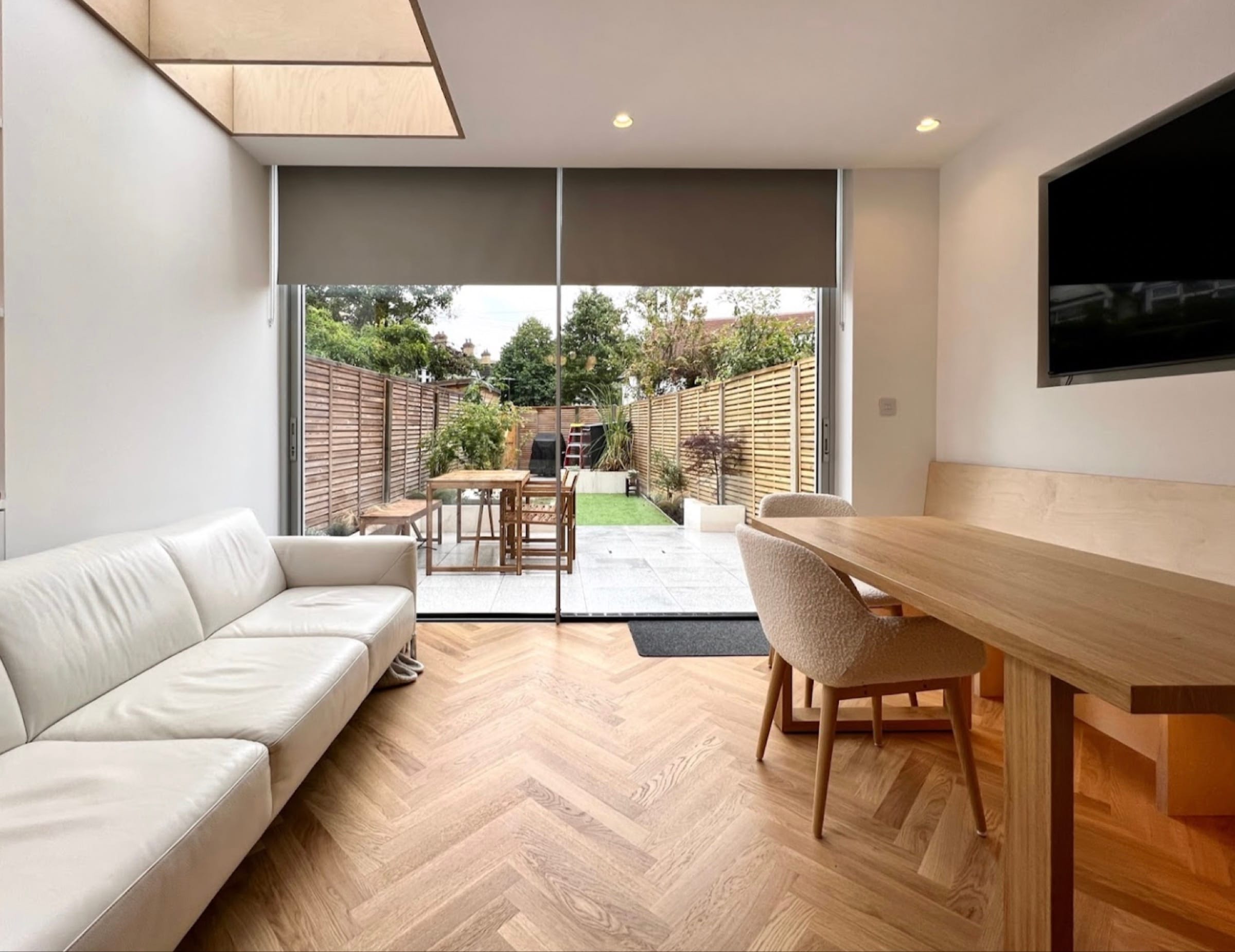 CostsThe Garden Wall: What Glazing Actually Costs in a Rear ExtensionStandard aluminium, bifold, slim sliders or steel — the five rungs of a rear-extension garden wall, costed per square metre and over one real opening we measured.
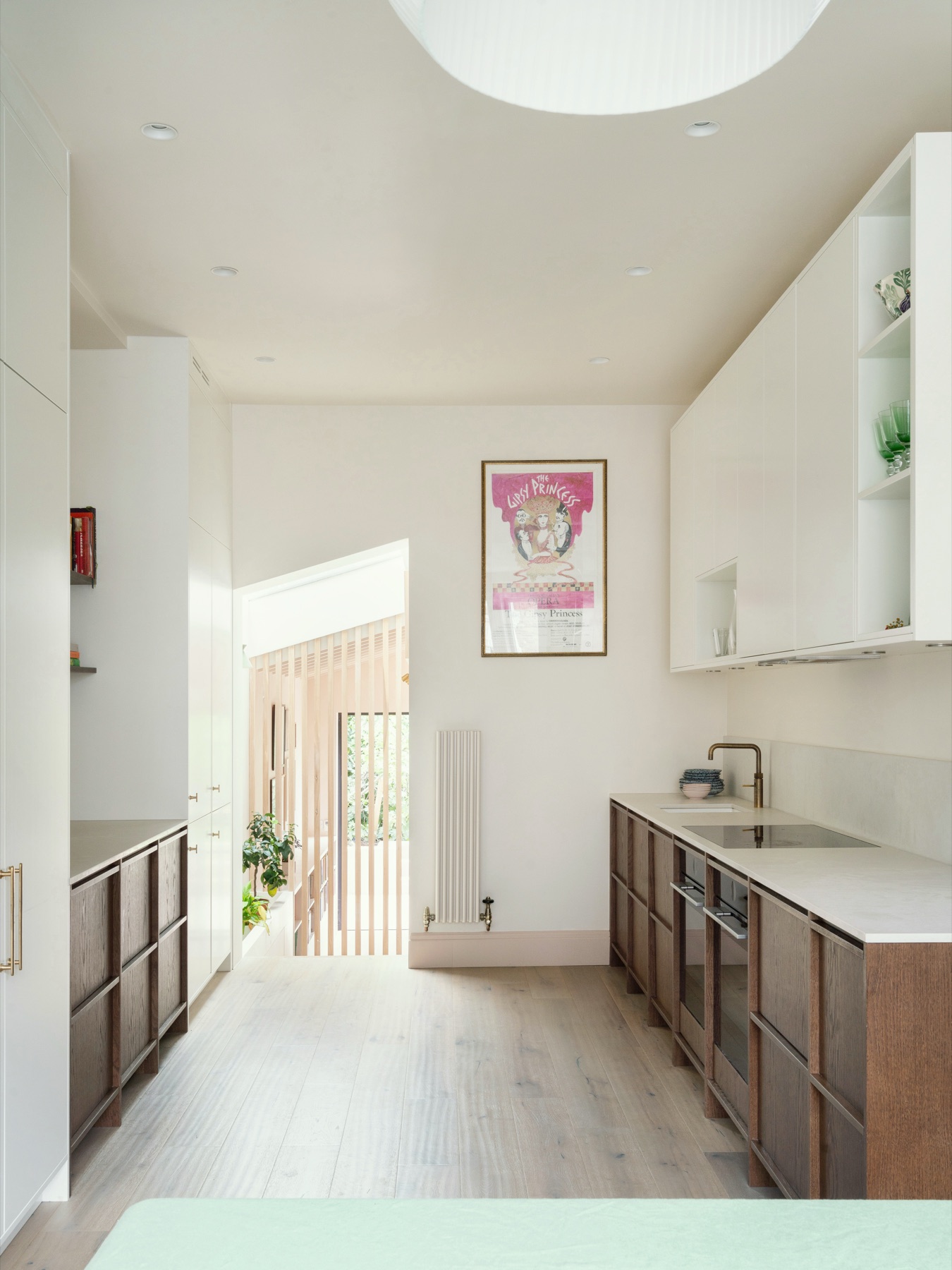 CostsA Wrap-Around Extension Priced Three Ways: What Design and Build Actually CostsA real London wrap-around extension quoted three ways: the three phases, nine milestones, two decision gates, and where every pound of the total went.
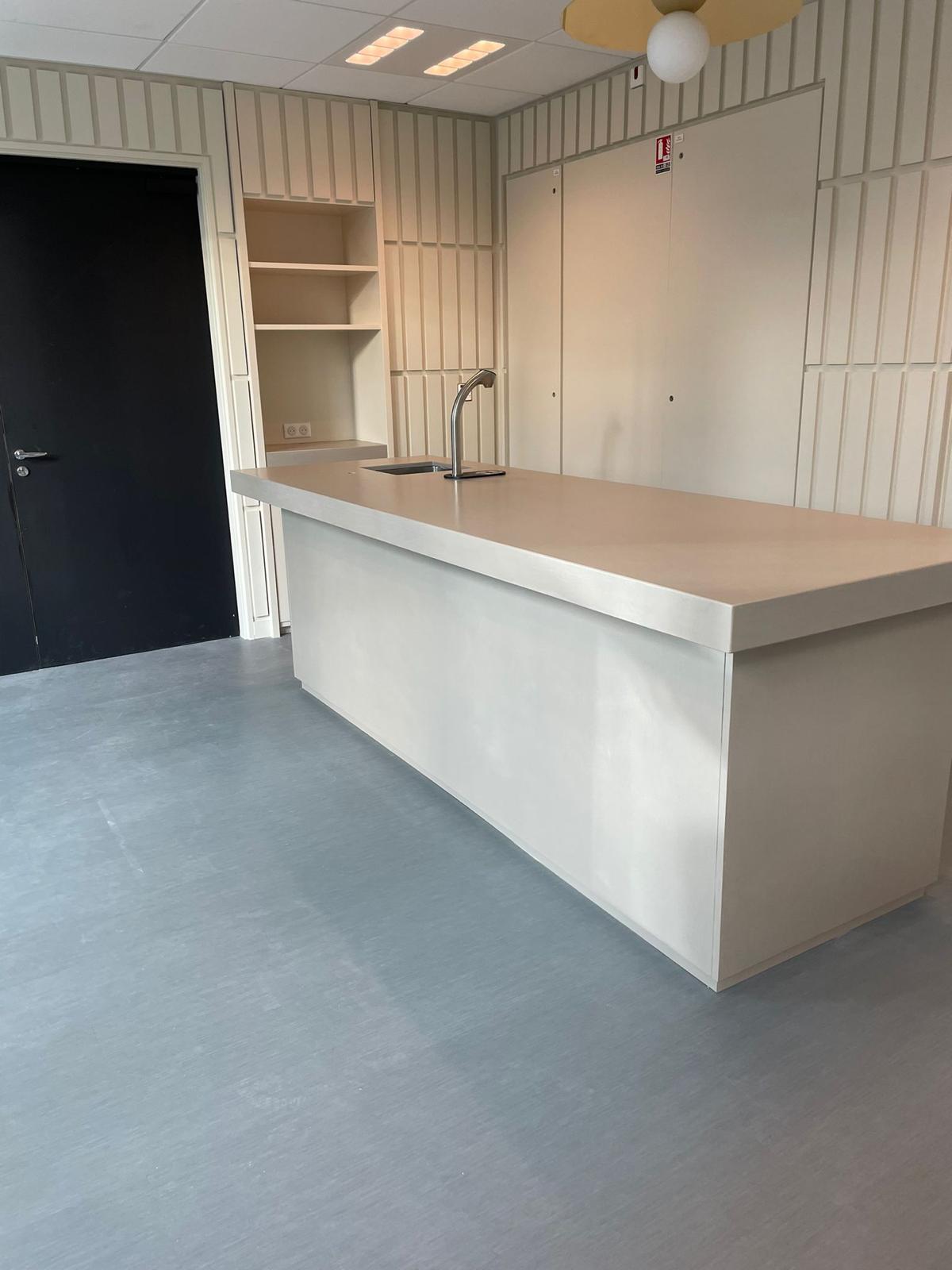 On siteSeamless Bathrooms Over Existing Tile: What Happens, What Drives the Cost, and When to Say NoOne continuous surface over the tiles you already have. What happens on site, the two tests that decide it, why quotes vary so much, and when to say no.
 On siteSpazioCemento or SpazioResina: Which Texture Belongs in a BathroomSpazioCemento is not cement — it is epoxy, named for its granular texture. Four specified textures, two products, and which one we put in a bathroom.