
What the Skip Costs: Strip-Out, Landfill Tax and the Waste You Design In
Landfill tax is £130.75 a tonne from April 2026. A fit-out that sheds 3.5 tonnes pays £463 in tax alone before the skip, the lorry or the labour.
- 4.8★ Google · 17 reviews
- £500 per week if we finish late
- £17m insurance cover · £5m public liability
- 12-month warranty on second-fix fittings · HomePro registered
- £550 survey credited in full
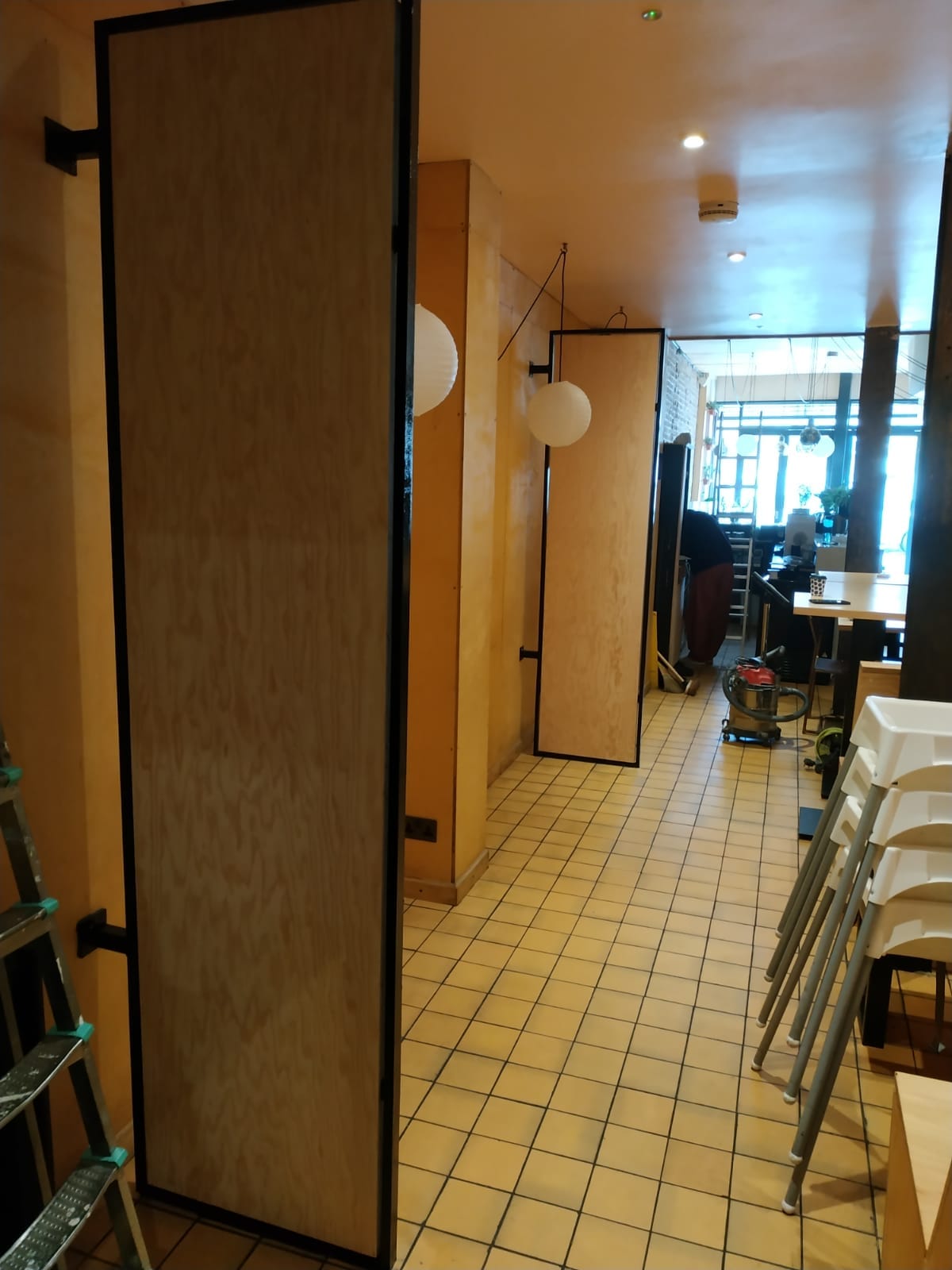
Landfill tax is £130.75 per tonne from 1 April 2026, and it is charged on mass. A fit-out that sheds 3.5 tonnes pays about £463 in tax alone — before the skip, the lorry or the labour to fill it. Our commercial fit-out page is where this work is quoted — from a survey, because the engine behind our residential estimator has no commercial rates. The strip-out cost guide covers the wider job, and the refit carbon post covers the same decisions measured in carbon rather than money.
Every figure below is ex VAT, and none of them is a quote. They are published so you can read somebody's strip-out line and tell whether it is sane.
The tax nobody budgets for
Tax only — not the skip, the haulage or the labour
| Route | Waste | Tonnes | Landfill tax |
|---|---|---|---|
| Strip out and replace | 3,541 kg | 3.54 | £463 |
| Keep · overlay · move · change | 242 kg | 0.24 | £32 |
£431of landfill tax not paid, on one restaurant, at one refresh. It is the smallest of the three savings on this page and the only one HMRC sets the size of.
HMRC landfill tax rates 2026-27, standard rate, from 1 April 2026. Assumes everything goes to landfill, which is the worst case rather than the likely one — inert tile is often crushed for hardcore, and gypsum must be segregated whatever happens to it. Tax only: skip hire, haulage and labour are all extra, and all of them also scale with mass. The tax rate changes each April, so check it against the current year before quoting it.
That is the tax alone. Skip hire, haulage and the labour to load it are all extra, and all three scale with the same mass — which is the real point. Disposal is one of the few costs on a fit-out where the quantity is fixed at design stage and everything downstream is arithmetic on it.
Why plasterboard is its own problem
Gypsum cannot go in a general skip. It is banned from landfill alongside biodegradable waste, because in combination the two produce hydrogen sulphide, so it needs a segregated stream, its own container and a contractor who takes it.
On a London site the cost is often not the binding constraint — the space is. A second container on a street with no loading bay is a licence, a suspension and sometimes a refusal.
- 01Around 34 kg of gypsum per square metre. A stud wall with two boards each side. Before studs, skim or fixings — so a partition run is measured in hundreds of kilos, not bags.
- 02Around 15% of new board becomes offcuts. Waste generated on the install, before anyone occupies the space. You pay to buy it and again to remove it.
- 03A separate container, by law. Segregation is not optional and not a preference. Budget the second skip or discover it on site.
One bathroom, the honest comparison
This is the number people most want and most often misread.
The sentence worth rememberingThe saving is in the strip-out line, not the bottom line. A contractor who shows you the 56% without that sentence is quoting the one number that flatters the method.
We set out the method, and the two tests that decide whether a floor can take it at all, in going over the tiles instead of ripping them out.
The partition that costs money every lease
A six-metre screen at 2.8 metres high is just under 17 square metres. At UK trade rates of roughly £90 to £140 per square metre supplied and fitted, rebuilding it in plasterboard costs about £1,512 to £2,352 — every refit, before strip-out and disposal.
That recurrence is the whole commercial case for specifying something that comes apart. A demountable system costs more once. Plasterboard costs less repeatedly, and on a five-and-a-half-year lease "repeatedly" arrives sooner than most budgets assume. The drawing decisions that make reuse possible are in specifying partitions that survive the next tenant.
Wet trades, and what a panel swap removes
Refreshing a ten-square-metre feature wall in board and skim carries £330 of skim and paint labour alone at our standing rates — and board, strip-out and disposal sit on top of that.
The figure is small. What it stands for is not: four trades and a drying period, on a floor that may still be trading. Swapping the face on a retained frame is one fitter and no wet trades, so the saving that matters is usually the week you did not lose, not the £330.
How to read a strip-out line in a quotation
- 01Is the waste priced by mass or by skip?. By skip hides the tax and the haulage inside a round number. By mass can be checked against the tonnage the drawing implies.
- 02Is gypsum separated out?. If there is one disposal line for a job with partitions in it, the segregated stream has been forgotten or absorbed. Ask which.
- 03Does it say ex or inc VAT?. Every figure on this page is ex VAT. A disposal line that quietly switches basis is a 20% surprise.
- 04What happens if there is asbestos?. Pre-2000 building, no survey, a fixed strip-out price — one of those three is wrong. This is the commonest reason a strip-out price moves.
An itemised quotation follows within 48 hours of the site visit, priced stage by stage rather than as a single figure — which for this work means the strip-out and the disposal appear as their own lines, with a quantity and a rate, rather than as a lump you cannot interrogate.
What these numbers are not
They are not a quote, and they cannot become one from a drawing. Strip-out cost is driven by access, floor level, whether there is a lift, what the street allows, what an asbestos survey finds and what is actually behind the wall. A published rate multiplied by an area is a sanity check, not a price.
The other honest limit: the tax rate above changes most Aprils. It is correct for the 2026-27 year and it will not be correct forever, so check it against the current HMRC figure before you use it in a budget.
If you want the ladder run over one live project, with both routes priced open-book so the strip-out line is visible on each, get in touch. A strip-out is quoted after a walk round, never from a drawing.
Straight answers
The home you actually want, finished on the date in the contract — and you watch every day of it happen from your phone.
You answer 3 questions. We do the drawings, planning, party wall, trades and snagging.
- 10% to mobilise, then weekly against work already done — with 5% held past handover: 2.5% released at practical completion and 2.5% at the end of the 12-month defects period
- £550 survey fee credited in full against your contract
- Every variation priced and signed before a penny is spent
No email needed to see your range. Quotes hold for 21 days, then materials re-price.
We are not the cheapest. If price is the only factor, we may not be the right fit — and that is fine.
Keep reading
- Build It So It Comes Apart: Specifying Partitions That Survive the Next TenantA 6-metre plasterboard screen sends 571 kg of gypsum to the skip every time it is rebuilt. A demountable one sends none — but only if the drawings allow it.
- The Refit Carbon Nobody Counts: Why a Short Lease Spends It Four TimesAn average Cat B fit-out spends 190 kgCO2e per square metre. On a 5.5-year London lease that is four fit-outs in twenty years — and the second one is avoidable.
- The Kitchen Refresh: Keep the Boxes, Change Everything You SeeA kitchen refresh changes the fronts, the floor and the worktop and moves nothing. Two numbers price it: your floor area and a count of units.
- Seamless Bathrooms: Why Grout Lines Are What Date a RoomA grout-free bathroom reads as expensive because the grid is gone. The surface is 2-3 mm thick, and it goes on over the tiles you already own.