
Provisional Sums: Why Your Final Bill Moves
A provisional sum is an allowance, not a price. It is the line that moves between your quote and your final bill, and the 4 questions to ask before you sign.
- 4.8★ Google · 16 reviews
- £500 per week if we finish late
- £17m insurance cover · £5m public liability
- 12-month warranty on second-fix fittings · HomePro registered
- £550 survey credited in full
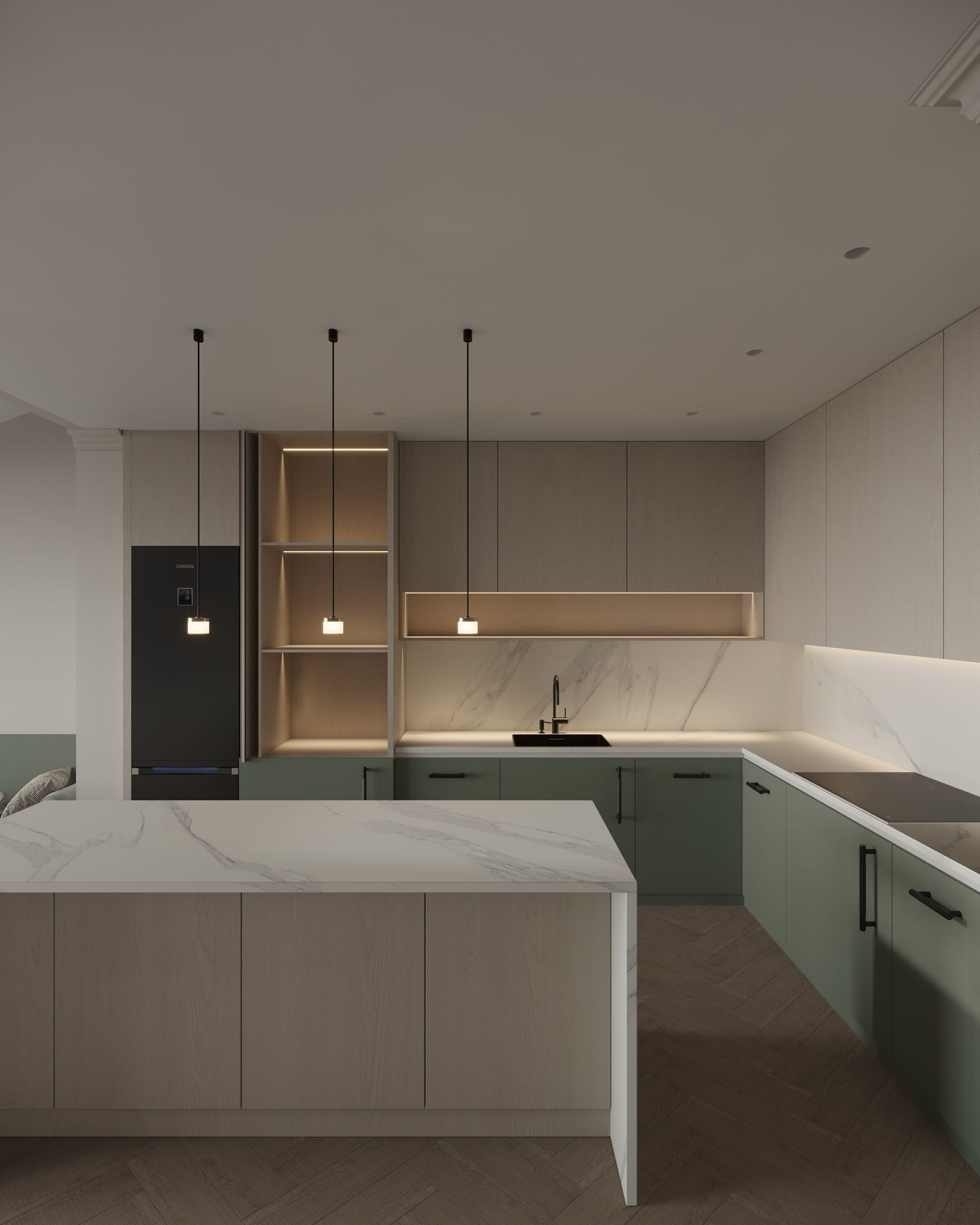
A provisional sum is an allowance, not a price. It is the line in a builder's quote most likely to move between the figure you accept and the figure you finally pay, and there are 4 questions that settle it before you sign rather than after. The estimator breaks a job into stages so you can see which ones are genuinely priced, and our extensions and bespoke joinery pages set out what normally sits behind those lines.
Most homeowners read a quote as a list of prices. It usually is not. A well-written quote is a list of prices with a few allowances mixed in, and the allowances are not marked in red.
What a provisional sum actually is
It is a number included in the contract sum for work that cannot be priced properly yet, because something about it is still unknown.
That "something" is almost always physical. Nobody knows how deep the foundations go until they are exposed. Nobody knows the state of the drainage until it is opened up. Nobody knows what is behind the plaster until the plaster is off. Rather than pretend, a competent estimator carries a considered figure and says plainly that it is provisional.
That is honest practice, not a dodge. The dishonest version is not the existence of the allowance — it is an allowance set low enough to win the job.
Provisional sum or PC sum — not the same thing
The two get used interchangeably and they are different mechanisms.
That last sentence is where most of the arguments start. A client doubles the kitchen allowance, assumes the fitting is covered, and discovers that a larger kitchen with more units also takes longer to install. Both movements are legitimate. Neither is obvious from the quote.
Where they normally appear
- 01Below ground. Foundations, underpinning, drainage. The depth and the ground conditions are the two things a quote cannot know in advance, and they are the two that move a budget most.
- 02Structural steel. Until the engineer has issued final sizes and connection details, the fabrication cost is an estimate. The section sizes on a planning drawing are not the ones that get made.
- 03Anything you have not chosen. Kitchen, bathrooms, flooring, ironmongery, lighting. If the specification is still open, the number in the quote is a placeholder for a decision you have not made.
- 04Making good. The repair work that only reveals itself once something is removed. Common in older London stock, and routinely under-allowed.
Why the cheaper quote can cost more
Two contractors price the same extension. One prices the groundworks against a real assumption about depth. The other carries a thin provisional sum. On paper the second is cheaper, and nothing in the document is false — the figure is clearly labelled provisional.
What has happened is that the risk has been moved from the quote onto you, quietly, using a word that most people read as a price. When the dig goes deeper than the allowance assumed, the difference is yours, and by then you have signed.
This is the same shape as a front-loaded payment schedule: the total looks competitive because the money has moved rather than been removed. We wrote about that separately in what is actually inside two different prices for one job.
How it should be reconciled
An allowance is settled by measurement against what actually happened, not by negotiation at the end.
The work is confirmed — by a survey, by a strip-out, by an engineer's drawing. It is then priced against the same rates the rest of the job was priced against. The difference against the allowance is agreed in writing, in both directions, before the money is spent. No variation happens without your written approval: every one is priced and dated before a penny is spent on it.
That last point is the one worth insisting on with any contractor. An allowance that turns into a cost without a conversation is not a reconciliation, it is an invoice.
The sentence worth rememberingA provisional sum is a question the quote has not answered yet. The number beside it tells you what the contractor expects; it does not tell you what you will pay. Ask what the allowance assumes, and you have turned it back into something you can compare.
What we do, and what we do not promise
We work to a contract plus variations, and we say so rather than promising a number that cannot move — the first genuine variation would make that promise false anyway. What we do instead is make the movement visible and small: every estimate is broken into the same twelve stages, from preliminaries to completion, with a quantity, a unit and a rate on each line, so an allowance sits next to priced work rather than buried in a single figure.
Where something genuinely cannot be known in advance, it is named as an allowance with the assumption written beside it. You can then interrogate the assumption, which is the only part of a provisional sum that is actually checkable before work starts.
If you want to see how the stages are structured before you talk to anyone, the payment schedule piece sets out how money should track work as the job runs.
Straight answers
The home you actually want, finished on the date in the contract — and you watch every day of it happen from your phone.
You answer 3 questions. We do the drawings, planning, party wall, trades and snagging.
- 10% to mobilise, then weekly against work already done — with 5% held past handover: 2.5% released at practical completion and 2.5% at the end of the 12-month defects period
- £550 survey fee credited in full against your contract
- Every variation priced and signed before a penny is spent
No email needed to see your range. Quotes hold for 21 days, then materials re-price.
We are not the cheapest. If price is the only factor, we may not be the right fit — and that is fine.
Keep reading
- Snagging vs Defects: Where the Line FallsA snag is on the list before you accept the work. A defect appears in the 12 months after. One date separates them, and it decides who pays.
- Your Builder Has Overrun. What Now?A 32-week programme that ran close to two years. What to do first when a London build has stalled: stop paying, check the record, measure what is covered up.
- Choosing a Fit-Out Contractor in LondonFour ways to buy an office fit-out in London. They differ in who carries the risk, not in what gets built — and how to tell which one you are being sold.
- Office Refurbishment vs Fit-Out in LondonRefurbishment, fit-out and reinstatement are three different jobs on the same floor. What you keep decides which one you are buying — and who pays for it.